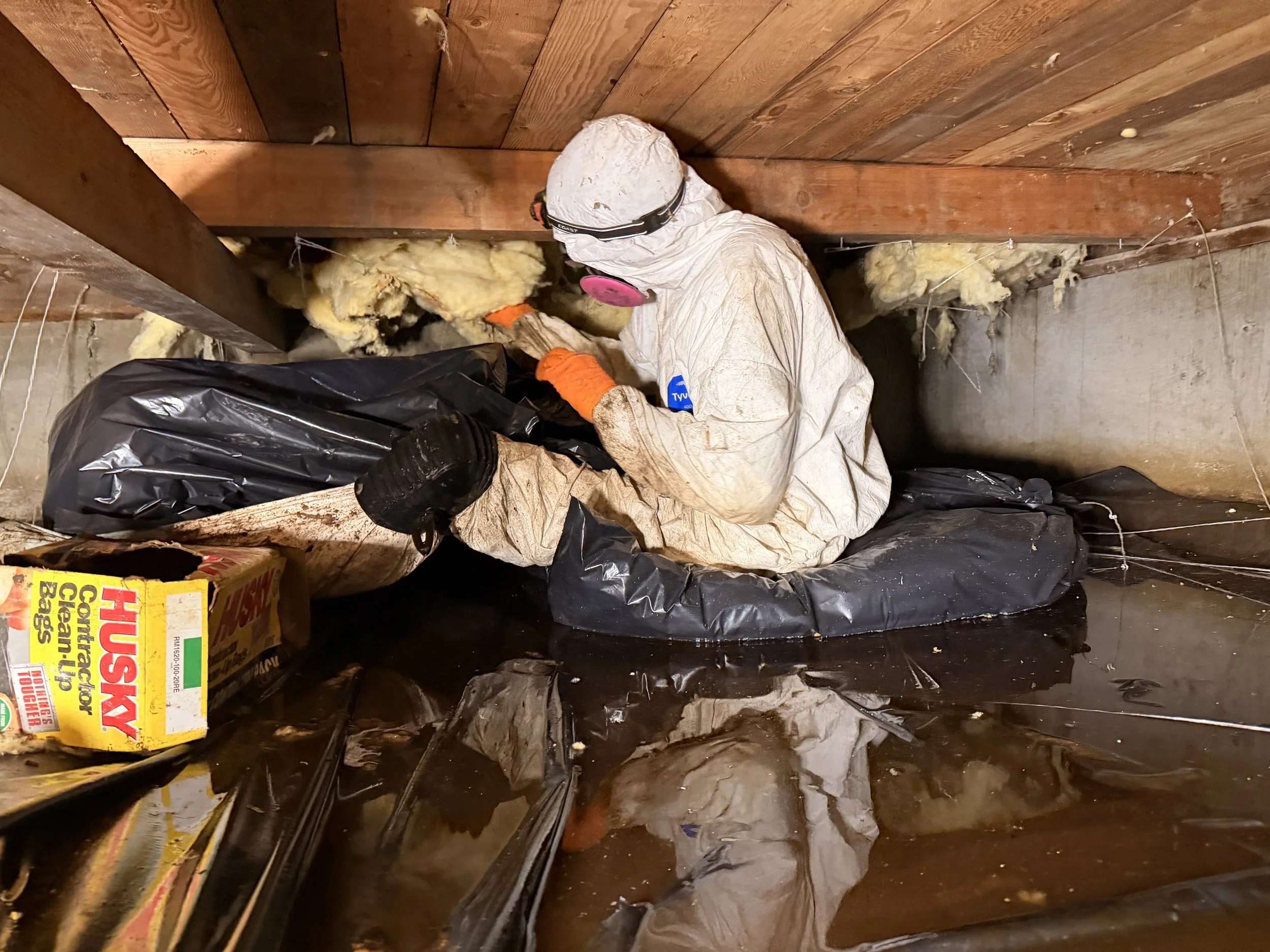
Our complete encapsulation system turns your home’s crawl space from a vented area to a controlled area.
Uncontrolled Crawl Spaces
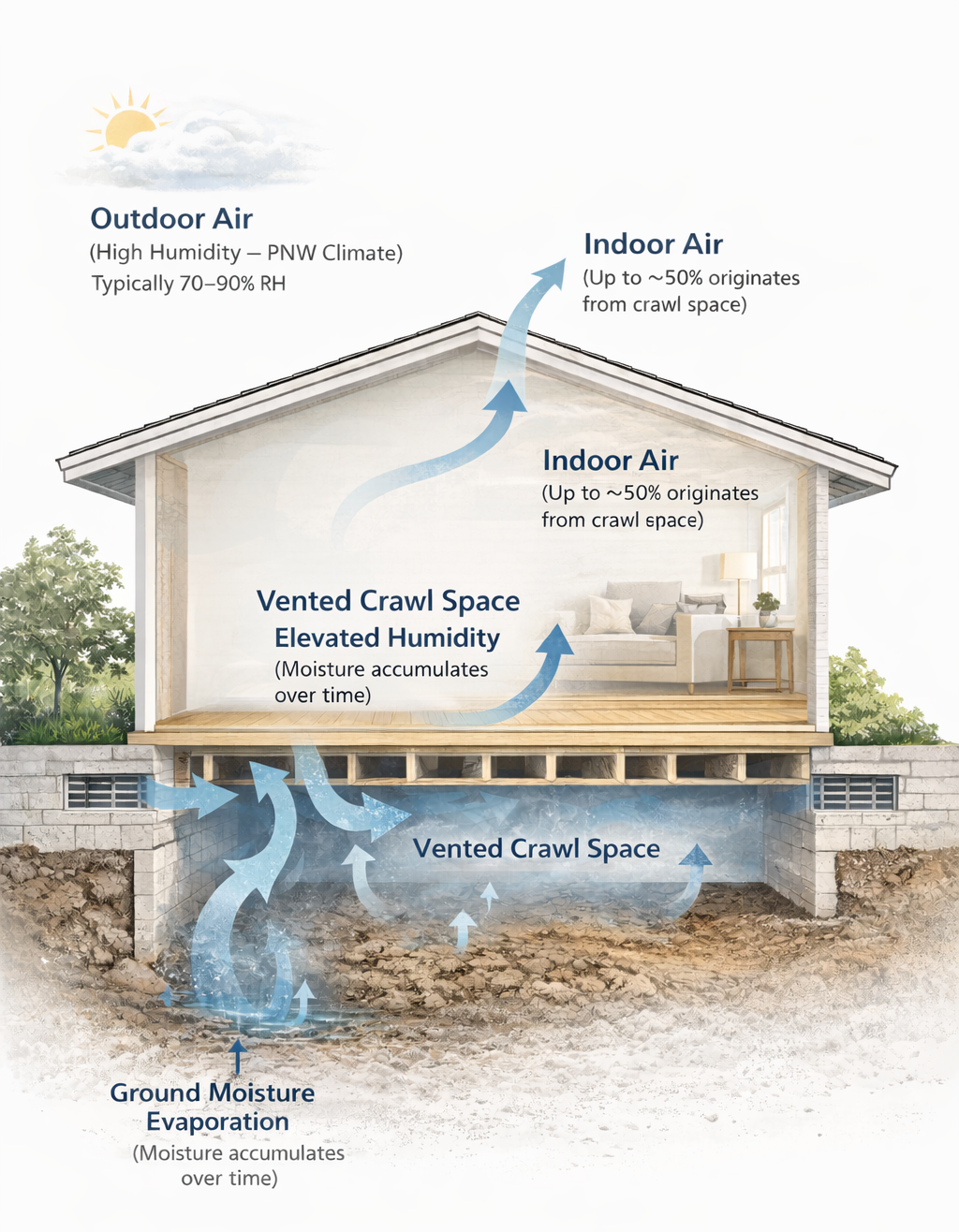
In the Kitsap area, outdoor humidity stays high for much of the year, often reaching 75–95%. Optimal humidity for your home is only 30-50%.
That damp air flows straight into your crawl space through vents and builds up beneath your home. Add to that the moisture that comes from soil.
The stack effect then pulls that air inside—so what’s under your house becomes part of the air you breathe.
In our Pacific Northwest climate, a vented crawl space rarely has a chance to dry out—leading to musty odors, mold, and wood damage over time.
Click here for more information about indoor air quality and your health.
Encapsulated Crawl Spaces
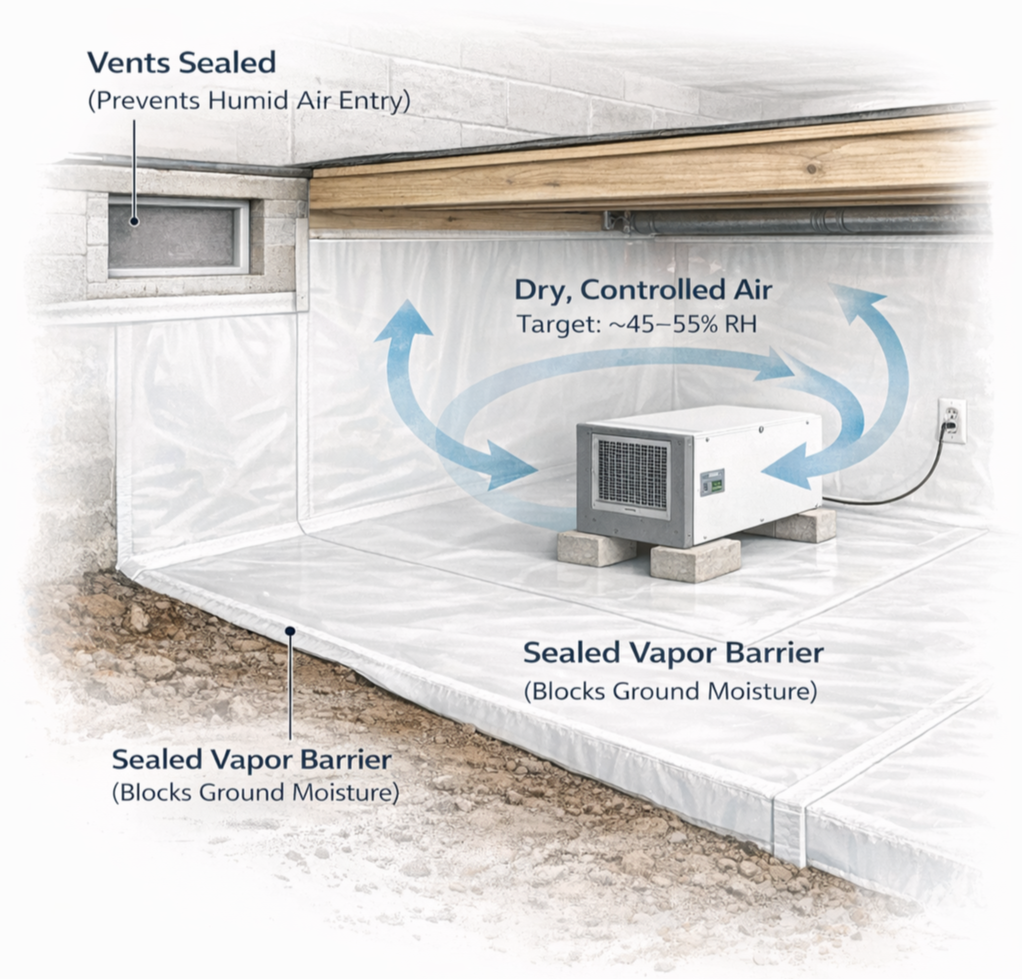
Sealed, protected, and actively managed
Our encapsulation system takes your crawl space from being controlled by nature to be fully managed and protected.
Instead of pulling in damp outside air, the space is sealed and kept dry year-round.
Moisture from the ground is blocked.
Outside air is shut out.
Humidity is actively controlled with a dedicated dehumidifier.
The result is a crawl space that stays dry, stable, and predictable—regardless of the weather outside.
Schedule Your Free Inspection
Our Process
A proper crawl space encapsulation is a coordinated system designed to control air movement, moisture, and temperature. Each component plays a role, and performance depends on how they work together.
Our process typically includes:
Preparation & Protection
Install a negative air system during work to protect indoor air quality
Remove and properly dispose of existing insulation, vapor barrier, and debris
Treat affected areas to address mold, mildew, and other organic contamination
Perform rodent exclusion to protect against future intrusion
Moisture & Ground Control
Install a high-quality, heavy-duty vapor barrier across the ground and walls
Mechanically fasten and seal the vapor barrier to walls, piers, and transitions
Seal all seams and penetrations to create a continuous moisture barrier
Install drainage systems and sump pumps (as necessary)
Air Sealing & Thermal Control
Seal crawl space vents to eliminate outside air intrusion
Seal subfloor penetrations to reduce air movement into the home
Insulate and air-seal rim joists (a major leakage point)
Insulate foundation walls to bring the crawl space into the conditioned envelope
Air seal and insulate the crawl space access door
System Integration & Control
Seal HVAC ductwork with mastic to prevent air leakage and energy loss
Install and calibrate a dedicated dehumidifier with proper condensate drainage
Verify and manage humidity levels and overall system performance over time
When these elements are combined correctly, the crawl space becomes a controlled, dry environment rather than a source of moisture, air quality, and structural problems.
Encapsulation is a great fit if:
You notice musty odors in your home
Your crawl space feels damp, humid, or smells stale
You’ve had standing water or signs of past moisture issues
Floors feel cold in the winter or your home is hard to keep comfortable
You’re concerned about mold, air quality, or allergens in your home
You want a long-term solution—not a temporary fix
Every home is different. Some require full encapsulation, while others benefit from more targeted solutions.
Our team performs a detailed inspection and walks you through exactly what’s happening in your crawl space—so you can understand the problem and choose the right solution with confidence.